
Do we have free will?

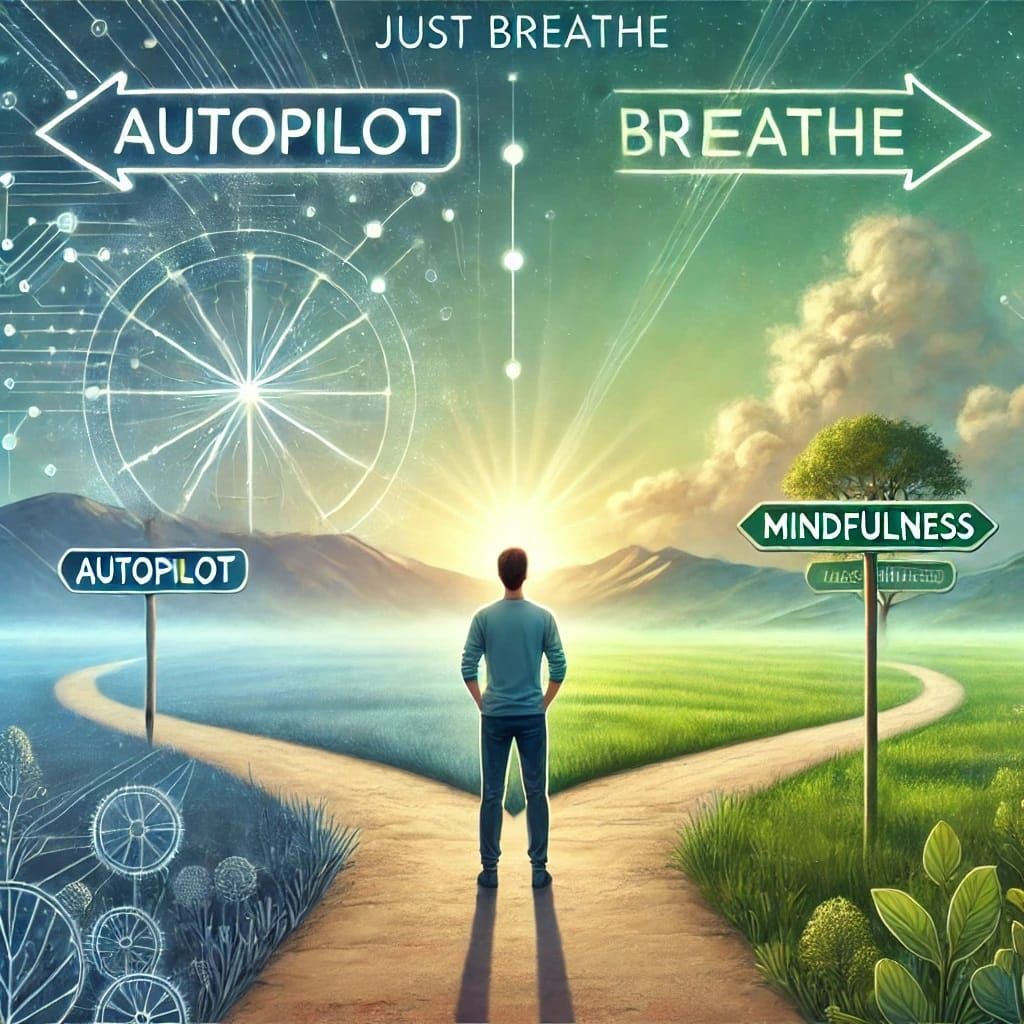
Do We Truly Have Free Will Without Mindfulness?
When we talk about free will, we often imagine a world where every decision is ours to make—a life where we consciously choose our thoughts, actions, and reactions. But how much of that is actually true? How much of our day-to-day life is driven by habit, conditioning, and automatic responses?
The Science of Autopilot and Free Will
Research suggests that much of our behavior is driven by unconscious habits. Neuroscientists estimate that up to 95% of our thoughts, emotions, and behaviors are repetitive and automatic, operating from the subconscious mind. In other words, most of the time, we're on autopilot.
One study from the Massachusetts Institute of Technology (MIT) found that habits are formed through a process called "chunking," where the brain groups tasks together to save energy. While this helps us perform routine actions quickly, it also means we often respond without really thinking things through.
This raises the question: If we aren't aware of our choices, can we truly say we have free will?
Viktor Frankl and the Space Between Stimulus and Response
As Viktor Frankl famously said, "Between stimulus and response, there is a space. In that space is our power to choose our response. In our response lies our growth and our freedom." This "space" Frankl refers to is the key to breaking free from the grip of automatic reactions and moving toward true conscious choice.
Without mindfulness, that space narrows, and our ability to make deliberate choices shrinks. We become victims of our past experiences, societal conditioning, and deeply ingrained beliefs, reacting rather than choosing.
Case Study: The Power of Mindful Choice
Consider a simple example: a study published in the journal Psychological Science explored how mindfulness can impact decision-making. Participants who practiced mindfulness meditation showed a significantly higher awareness of their impulses and were more likely to make decisions based on present-moment awareness rather than habit or emotional reactivity.
This practice of mindfulness shifted their decision-making from automatic reactions to intentional responses—showing that cultivating mindfulness can indeed increase our sense of free will.
How to Expand Your Free Will with Mindfulness
Mindfulness is the tool that allows us to create that space between our thoughts and our actions. Here are a few simple practices to start expanding your ability to make conscious choices:
- Mindful Breathing
- Take a few deep breaths when you wake up and before reacting to stressful situations. Slow, deep breaths help activate the parasympathetic nervous system, which calms your body and mind, giving you that space to choose your response.
- Pause Before You React
- Before making a decision, try this: pause, take a breath, and ask yourself, "Is this my choice or my habit?" This small pause can help you shift from reactive to proactive.
- Body Scan Meditation
- Spend a few minutes each day bringing your attention to different parts of your body. This practice helps anchor your awareness in the present moment, making you more conscious of your thoughts and feelings.
- Journaling
- Write down moments when you felt reactive throughout your day. This exercise can help you identify triggers and bring awareness to patterns that might be running on autopilot.
- This is why I post and now blog.
The Path to True Freedom
When we begin to incorporate mindfulness into our daily lives, we open up a new realm of possibilities. We expand that crucial space between what happens to us and how we respond to it. Free will becomes not just an abstract concept but a lived experience.
Remember, the journey to reclaim your free will begins with a single breath. So, whenever you feel stuck or on autopilot, pause and...
Always remember…JUST BREATHE.
"This article is for informational and reflective purposes only."